Cashew Nut Shell Liquid (CNSL)
Industrial-grade CNSL recovered from our own shell stream — a genuine renewable feedstock, not a waste product.
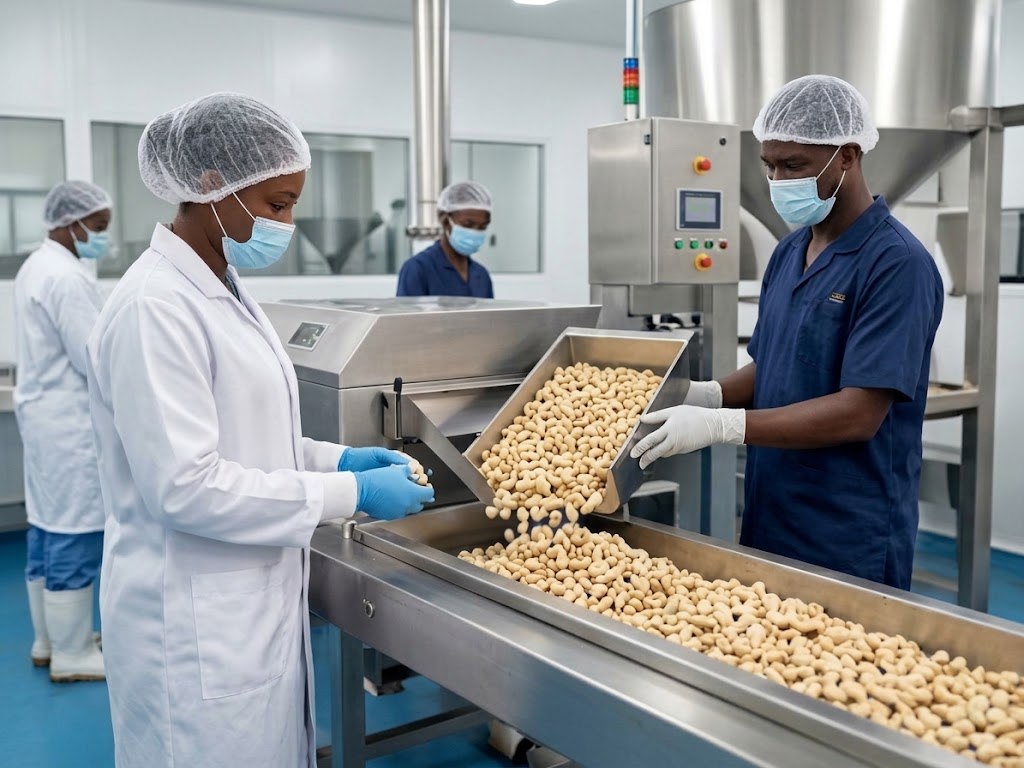
The shell is not waste.
It is a chemical feedstock.
Cashew nut shell liquid is a dark, viscous liquid held in the honeycomb structure of the shell. It is one of the few commercially significant plant-derived phenolic feedstocks, and it is produced as the by-product of a food process rather than grown for the purpose — which is precisely what makes it attractive as a renewable industrial input.
Every tonne of raw nut we process generates shell. Recovering CNSL from that stream turns a disposal cost into a second revenue line, and gives industrial buyers a bio-based alternative to petroleum-derived phenols.
Technical specification
Contract specification. Full documentation, certificates of analysis and sample lots available on request.
Product
Cashew nut shell liquid. [Natural or technical grade to confirm]
Source
Recovered from our own processing shell stream
Appearance
Dark brown to black viscous liquid
Key constituents
Anacardic acid, cardanol and cardol — proportions vary with extraction method
Specification
[Viscosity, moisture and iodine value to confirm]
Packaging
[Drum size to confirm]
HS code
[To confirm — CNSL is commonly classified under 1515.90]
Minimum order
[MOQ to confirm]
Incoterms
FOB Tema — CIF / CFR on request
What CNSL is used for
A bio-based phenolic input with established industrial demand.
Friction materials
Brake linings and clutch facings — historically the largest single industrial use.
Resins & coatings
Phenolic resins, surface coatings and anti-corrosion primers.
Epoxy curing agents
Cardanol-based curing agents and plasticisers.
Surfactants & specialities
Surfactants, and timber and agricultural preparations.
Talk to us about volume and specification
CNSL specification varies with extraction method. Tell us your application and we will confirm what we can supply.
Frequently asked
Is CNSL a waste product?
It is a by-product, not a waste. It is recovered from shells that would otherwise be burned or dumped — which is what makes it interesting as a renewable industrial feedstock rather than merely a cheap one.
What is the difference between natural and technical CNSL?
Natural CNSL is solvent-extracted and retains anacardic acid. Technical CNSL is produced with heat, which converts anacardic acid into cardanol. Which you need depends entirely on your application. [Our grade to confirm.]
What is it used for?
Friction materials such as brake linings are historically the largest use, alongside phenolic resins, surface coatings, epoxy curing agents and surfactants.
Can you supply consistent specification year-round?
Supply follows our processing volume, which follows the harvest. [Availability and storage capacity to confirm.]